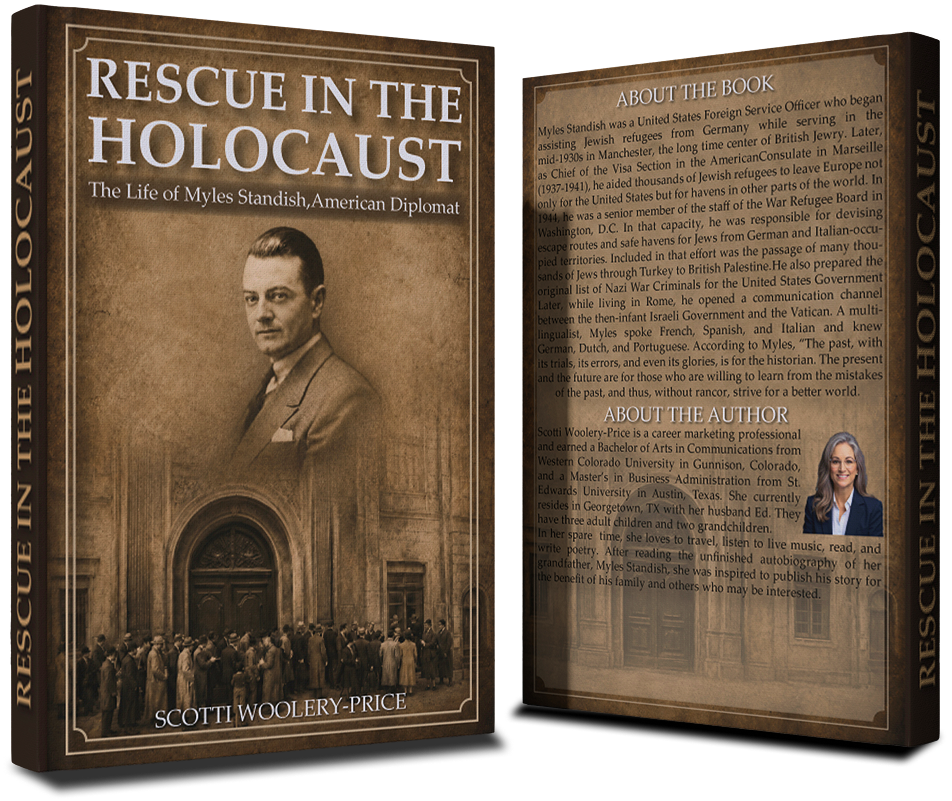
On a hot July morning in 1940, more than 2,500 refugees lined up outside the American Consulate in Marseille, hoping a stranger behind a desk would decide their life was worth saving.
That stranger was thirty-one-year-old diplomat Myles Standish.
When his government told him to follow the rules, he found the space they allowed, and used it to save thousands of lives.
This is his story. It almost disappeared. This is how it didn't.
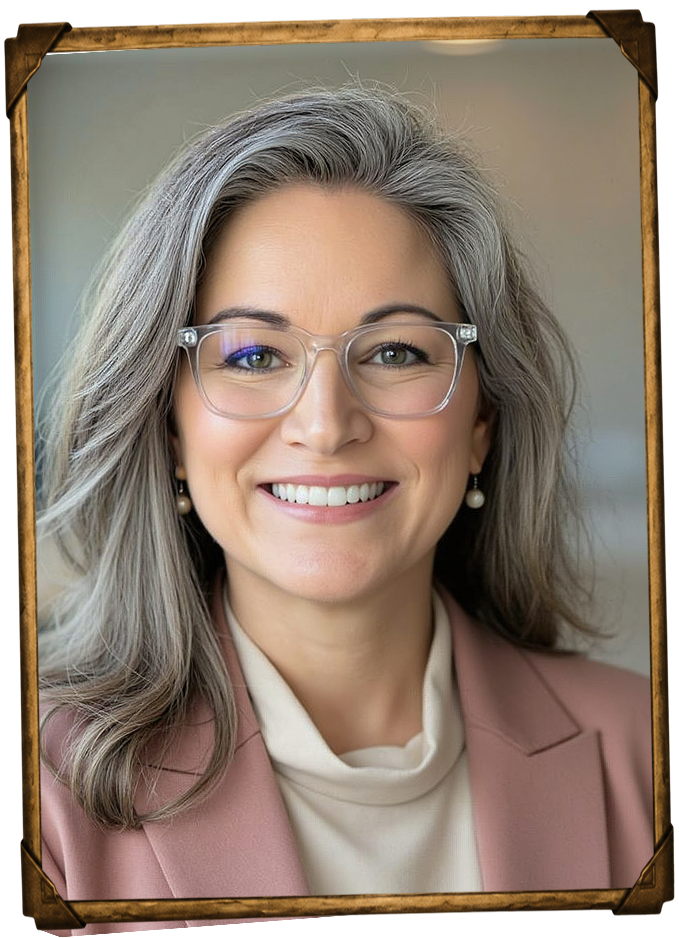
Scotti Woolery-Price never set out to write a book. She set out to find a photograph.
It began with a phone call from a consular officer at the U.S. Department of State who was writing an
article for a Consular Affairs History Project
While researching, the consular officer had come across Scotti’s family tree online. A single request - "Do you have a picture of Myles during his time in Marseille?"- sent Scotti on a quest that led to perusing family letters, photographs, and records that no one outside the family had seen in decades
What she found changed everything. She discovered that her grandfather had spent more than a year of his life defying his own government to save strangers from the Holocaust and had almost never spoken about it.
Scotti made several tips back east to visit Myles’ daughters, Georgia and Melane, and to copy family documents. She spent days at the National Archives in Maryland tracing her grandfather’s name through State Department cables and later read through War Refugee Board files. She talked to survivors' families. She studied every book she could find on wartime Marseille. Slowly, a private family mystery became a book she felt obligated to write, not just for the Standish family, but the historians, survivors, and readers who deserve to know his name
"What my parents did, anyone should do, because it was the right thing to do. I was raised to believe that if someone is broken down on the side of the road, you stop and ask if you can help."
Rescue in the Holocaust is the true account of Myles Standish, Chief of the Visa Section at the American Consulate in Marseille, who, alongside his colleague Harry Bingham IV, issued thousands of visas and travel documents to refugees stripped of their citizenship by the Nazi regime, in direct defiance of orders from Washington.
Working against a State Department instruction to slow refugee immigration to a crawl, Standish and his small team issued approximately 8,500 visas and 2,500 Affidavits in Lieu of Passport in a single year, more than any other American consulate in France, and quite possibly in all of Europe at that time.
He worked alongside Varian Fry's Emergency Rescue Committee to spirit endangered artists and intellectuals out of the country. He hid refugees in the boot of his own car on the back roads to Spain. He walked into the internment camps himself and signed papers no one else would. Most courageously, he personally spirited famed author Lion Feuchtwanger out of an internment camp, putting himself in grave physical danger.
Myles Standish is not as well-known as Varian Fry or Raoul Wallenberg. He never sought recognition, and for most of the last eighty years, history nearly forgot him along with it. But the record of what he did, preserved in archives, family letters, and the memories of the families he helped save, tells a story that belongs in the world.
This is a book about the courage of the desk: not the courage of the battlefield, but the quieter, harder courage of looking at the person standing in front of you and finding a way to give them what the rules said you couldn't. It's a reminder that history isn't only made by armies and governments. Sometimes it's made by one ordinary, imperfect person who decides not to look away.
"I picked this up expecting a history lesson and got something closer to a gut-punch. By chapter three I'd forgotten I was reading nonfiction; I just wanted to know what happened to the people in that line."
Mary Paul
owner
"What got me wasn't the heroism, it was the cost. This isn't a book about a man who did the right thing easily. It's about what it took out of him to do it at all."
Sarah Phill
owner
"I've read a lot of WWII history, and I'd never heard Myles Standish's name before this book. That alone tells you something. It shouldn't have taken this long for his story to surface."